2.25.2022

A Year in Essays: 2/25/22 - Cruel War

There is an unsettled disquiet about a war, even in another part of the world, even not fully involving us. We know it is there in the images of people hiding in dugout spaces, perched with guns in the snow on ruined walls. We feel it reverberating in the blare of 100-point headlines in the newspapers, the clarions of disaster. Our heads ring with the echo of global prayers from the stricken and the allied alike.

Do the invaders pray as well? Possibly they are praying for clarity and maybe forgiveness. They are attacking those who are of the same blood lines, the same stock, shared names and faces and in some cases language. The attackers cannot tell themselves from their victims without their uniforms.

Here, thousands of miles from the lines, we create our own furore in political barbs and economic whining. We have the luxury to be upset about a temporary rise in the cost of our gas or a temporary drop in the worth of our portfolios. Our sons and daughters may some day be brought into the morass; it has happened too many times before in our history. But for now, they are others’ children who are at risk, so we are confident in taking sides or giving our opinions from partial knowledge or ignorance.

But don’t be fooled. War in one place is hardship everywhere, whether through economic doubt or ecological catastrophe. Whether through refugees or the need for humanitarian aid. Whether through empathy or struggle. This war is shouting headline infamous, but all war is global. The seething disquiet tell us so.


2.22.2022

A Year in Essays: 2/22/22 - Happy Twos-Day

Today the world went collectively gaga over an accident of the calendar. On “Twos-day,” 2/22/22, the true superstitious underpinnings of our society were on full display. People got married in droves (“two-by-two” I guess), celebrated the births of auspicious children, and watched the clock in breathless fascination for 10:22 PM and 22 seconds (2222:22 by military time). Some even dug up old episodes of the benign sitcom “Room 222” to watch as a special occasion.

As calendar milestones go, Twos-day was fairly benign. No one to my knowledge thought the world was going to end, at least no more so than this crazy time already would have us believe. There were no cult watches or mass suicides as there were when the Mayan calendar supposedly ended (did those people panic in late December every year?) and no travel shutdowns for doomsday like at Y2K. There was no attempt to form a ritual linkage of all human arms as on the date of the Harmonic (dubbed by the less generous the “Moronic”) Convergence. All in good fun was this most recent of serendipitous palindrome days. But Twos-day does point to an innate superstition that even in modern society we cannot fully shake.

In the midst of Twos-day I went to the grocery store, stepping out with my bundles to encounter a woman in the midst of a sneezing fit. Two or three sneezes in, I was close enough to her to murmur, “Bless you.” She smiled her thanks and then sneezed again into the crook of her arm. Imagine approaching a total stranger at any other time and saying those words. In most places, you can’t even greet folks with a simple, “Good morning” without being rewarded with a suspicious xenophobic glare. But a sneeze gives all of us the right, the expectation even, to make an intensely personal wish. So ingrained is the habit (which is what superstition is) that we forget the meaning of the gesture. Granted, if I said to that woman, “Congratulations on expelling the evil demons in your head” I might have been treated to a far colder response.

I think it is important to look for the magical in such a mundane and muddied world as we live. Although a date like 2/22/22 is inevitable, it is nice to think that on one day at least there could be a release from the typical constraints of shopworn lives. Even if the release is only a bit of dark humor like the cartoon I saw of robots celebrating 2/22/2222 on a desolate landscape saying, “How the humans would have loved this!” Or a feeling that your wedding, your child, your birthday, or some other routine part of your life is somehow special because of the date on the calendar.

I can’t wait until 3/3/33!


2.13.2022

A YEAR IN ESSAYS: 2/13/22 - Something Big

Another Super Bowl. I’ve seen them all, you know, some with more interest than others.

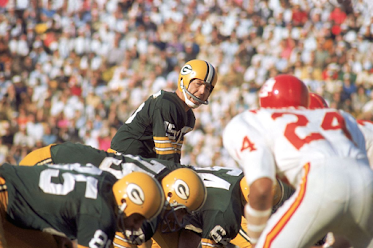
Although I can recall little about the first one in 1967 (not even called the Super Bowl then), I do remember my brother David’s incredible excitement. Somehow, he was a Green Bay fan – not sure how having been born in New York and lived part of his life in Pittsburgh. More than that, he was a huge football fan. He recognized the enormity of this event, even if the Networks and the rest of the world were unsure. To them, the AFL was just a start-up, after all. The Packers had won some enormous number of NFL championships in a row and should brush aside the upstarts. For many people, this game was little more than a curious exhibition – what the Pro Bowl is today.

Not for David, though. At the time of that first AFL-NFL match-up, we lived in New York, and he had followed with his curious avidity both the staid Giants and the upstart Jets (even then I gravitated towards the lowly Boston Patriots, probably in loyalty to my mother’s roots). He knew, knew in his heart, that the AFL was better than credited. He knew that the smart coaches that couldn’t break into the Old Boy’s Club that was the rank of NFL Head Coach were filling the younger league. He knew that the dash and flair of the AFL teams, with its goofy football and bright colors, overlay a revolution in the sport. Mostly, he knew the game would not be a lopsided folly. And it wasn’t – although Bart Starr and his Packers won handily, they had their hands full. David knew that this Super Bowl thing was going to be "something big!"

In 55 years, I have watched probably twenty Super Bowls sitting by my brother David’s side (along with my father if his beloved Steelers were playing). Many others I watched through continuous telephone conversations or at least a breathless phone call at the end (“What a game” or “What a crap game” his two favorite phrases). The last three years, of course, have been silent. I can tell you for whom David would have been rooting today. He never liked the Rams (although was a big Roman Gabriel fan). Too flash and flighty. There was something gritty about the Bengals that he always enjoyed. For him, it would have been Cincy all the way. 

But even with no rooting interest he would have been glued to the TV as he had each year, calling to me to join him and saying, “Come watch this, Keith. It’s going to be something big!”


2.09.2022

A YEAR IN ESSAYS: 2/9/2022: Olympic Ideals

In the ancient world, the Olympics were a quadrennial time of truce. States laid down their weapons to allow the athletes to come together for open if not friendly competition. That’s the myth at least.

Now during two separate Olympic cycles the bully leader of Russia has waged war on neighboring Ukraine, in one case riding the surge of Nationalistic pride from hosting (Sochi 2014) and this year banking on the distraction of the spotlight on a more powerful enemy who may have be in accord with Russian ambitions. Such naked aggression would seem to be against everything that the Olympic movement stands for.

Except we haven’t had an Olympics free of rabid nationalistic fervor in, well, forever. For every feelgood story of a Russian and an American forming a lifelong friendship, there is another of blood in the water polo pool. And even if athletes are becoming citizens of the world, playing more for their sponsors than for their countries, the fans and observers are ever obsessed with owning the national rival, of using the competition as a surrogate for war.

There is nothing wrong with patriotic pride. I enjoy the images of a brilliant athlete basking in the glory of their national anthem with gold strung around their victorious neck. Does it make me proud to be American? I guess so, if only with the vicarious pleasure that I watch any sporting event. If a team or individual for which I am rooting wins, I enjoy their moment. But I cannot see how the brilliance of an American Olympian is any reflection either on me or on our society.

Neither then are the athletes the carriers of a nation’s glory. They are engaging, beautiful individuals who had the fortune of being born in one country (or in some cases to citizens of a country). They do not of necessity embody the beliefs or the politics or the foibles of their nation. We call out for them to support this or that which aligns with our own beliefs, but those are our beliefs, not even our country’s, and they may have their own.

In a world where everything is politicized beyond reason, can’t we set aside the jingoism and simply enjoy the pageantry of glorious competition? It was a beautiful myth in the ancient world. It is a beautiful myth now.


1.25.2022

A YEAR IN ESSAYS: 1/25/22: Why Meat Loaf Matters

 A huge loss recently was the singer Meat Loaf. His music was entwined with my adolescence. He was the soundtrack and the aspiration of my younger self.

The album Bat Out of Hell came out in 1977, an explosive debut for the rising star. I don’t know how many of the songs became big hits, but some of them seemed to be playing everywhere. The biggest hit, “Paradise by the Dashboard Lights” was the song of that summer, a summer when I had just begun to drive and was just aware of the power of songs on the radio. The cut is driving and frenetic, barely a moment of release in its churning base-driven frenzy. In Boston, the radios had substituted out local announcer, Dick Stockton, for the famous spoken part by Phil Rizzuto so the song had a local charm. And, oh yes, I was “barely seventeen” at the time. Meat Loaf was singing about me. He was singing to me. And even if I could only dream about being in a situation like the doomed protagonist in his epic song, I felt the passion and the heat every time the song played or each of the thousands of times I listened to it on the LP.

The album and the singer stayed with me as I grew up. In college I discovered Rocky Horror Picture Show and Meat Loaf’s soulful, murderous Eddie was a powerful and haunting presence (whatever did happen to Saturday night?). His later music was elegant and emotional. I noticed his touch as a producer in songs I loved like Bonny Tyler’s “Total Eclipse of the Heart” or Air Supply’s “Making Love Out of Nothing at All.” But it was the powerful virtuosity of his first songs that stayed with me.


His voice was a gauge by which I measured mine. In 1978-79, I was just coming to terms with possessing an expanding tenor voice, singing both classical and jazz in college. Intensely proud of my upper range, I wanted to be great. Meat Loaf’s voice was the reach just beyond my grasp, particularly on the ballad “Two Out of Three Ain’t Bad.”  I sang through the song an untold number of times, sometimes with the record, sometimes on my own, in showers, common rooms, bedrooms, archways, hallways. I must have been a real pest. It was the high notes I was aiming for, those magnificent soaring lines that Meat Loaf made so effortless and for me were a hash of squeal and falsetto. I never got there back then and, with time, tucked the song away into my file of memory.

The other day when Meat Loaf died, “Two Out of Three” popped into my head at once. With the miracle of Amazon Echo, Alexa was playing the song for me almost before I had asked her to. I was singing along, every word etched in the deep recess of my long-term memory. Sailing through chorus and verse, the mature tenor me stayed with Meat Loaf high note for high note. Then the bridge, at the stratospheric line about the “Coup de Ville hiding at the bottom of a Cracker Jack box,” miraculous to see, I was still in the game. But Meat Loaf had another register and the song transposes even higher, “never be able/ to give you something/ something that I just haven’t got.” Beaten again and at last. Well played, Meat Loaf. Again and finally, well played.

Ah well. What’s a heaven for?


1.20.2022

A YEAR IN ESSAYS: 1/20/22 - Is Time Money?

The adage goes, “Time is Money.” As with many an old saw, this is one of my most pet of peeves.

I don’t dispute that time is valuable. It is a non-renewable resource, the only one that all humans have in their personal possession. Time is also an unknowable and unmeasurable asset. None of us can speak with certainty about Time except in the broadest of platitudes and generalizations. “There are only twenty-four hours in a day,” we say. “There are seven days in a week,” we remind ourselves. Even these are arbitrary. There are twenty-four hours in a day only because we have decided to measure time from sunrise to sunrise and because we have chosen to split into the odd increment. Even then, it is an uneven balance, changing as the year (another arbitrary designation) rolls along so that some days will have slightly more or slightly less time in their documented hours. The week is even more profligate. There is nothing special about seven days. A Sunday need not be distinct from a Tuesday or a Friday.

What is most at dispute is the concept of value. We make the tacit assumption that life (and therefore time) has value and in felicitous circumstances I hope it does. We can choose to appreciate the beauty of our time, of each breath, of each whisper of breeze on our cheek, of each delicate color of sunset. But that is a choice. For some bleak souls, time is a curse – loneliness, illness, pain, the whole litany of things that are also part of the human state. I guess it is safer to say time is precious, although even that is a value judgement. Perhaps, the truest and blandest statement is that time is finite.

Which brings us to my peeve. “Time is Money” implies that money is the equivalent of value or even that the finite nature imparts a monetary value. But money and its pursuit are the most arbitrary of goals. The implication that any moment spent not in accumulation is wasted is both erroneous and insulting. The statement makes Money the defining factor for all of endeavor, not what we do with the money nor what pleasure it may provide.

I would argue that Time is not Money, but the reverse. Money is Time; time to enjoy the fleeting moments of beauty and humanity that our finite and precious moments offer us.


1.18.2022

A YEAR IN ESSAYS: 1/18/22 - Against Radical Education Reform

 Yesterday, I bit off more than I could chew. I tried to write an essay about Martin Luther King, Jr.’s birth anniversary and got weighed down in awkward description. My anger got the better of me in a way that Dr. King would not have accepted. There is too much to respond to and too much need to speak out.

Today, I’ll try to clarify my writing in discussing the radicalization of attacks on educational freedom. Contrary to the conservative argument, educational freedom is not achieved by banning teachings or books. How could outlawing thoughts be any form of freedom? Rather, it is in allowing open thought and discussion to foster, even when those avenues may not be comfortable or glorious.

There are a few facts that are glossed over by the proponents of strict governmental control on teaching. The first is that education is not a comfortable experience. By definition, it is a step into the unknown and that may make a student leery. But facing the unknown and learning to accommodate one’s expanding knowledge is an integral part of growing. I was exceedingly uncomfortable learning calculus. It made me feel foolish to struggle through many of the mathematical ideas and to get low grades. But I would never have expected or wanted my parents to try to ban it from the school curriculum.

Another fact is that Critical Race Theory is NOT being taught in grade school curricula. It is true that History and Social Studies are now being taught through a broader framework than the “Glory of Our National Heritage,” but that should not shame or discomfort anyone who is interested in learning more than a superficial truth. What IS being taught in a graduated fashion is the formation of critical thinking skills pertaining to American and World history – context, nuance, perspective. Parents should welcome this since it will make their children better prepared for the subtleties of real life beyond the safe harbors of the schoolroom and home.

Finally, there is no scenario where the umbrage of a single parent or even a group of them should influence the curriculum for all children. A parent or even a collective organization must not have control over what is offered in education to all students. I guarantee that what I want my child taught is not the same as what you want your child taught. There already is a mechanism to control the interaction between curriculum and student. It is called parental involvement. If a child is uncomfortable with a facet of learning, it is the parent’s place to discuss it with them, not the school’s or other parents’ responsibility to compensate.