4.09.2022

A Year in Essays - 4/9/22: Cricket Calls

Let’s talk some cricket – four words I never thought I’d say. Cricket is my new fascination, having discovered a channel on my cable package that shows the sport (or commentary about it) 24 hours a day.

In point of fact, my fascination goes back much further. In 1978, freshly scrubbed and graduated from high school, I traveled to Scotland and England with my brother for the only boys out vacation of our lives (not strictly true, we had a short jaunt to Pittsburgh for a baseball game much later). It was June, so the British weather was spotty at best. There were a few pleasant days – our jaunt to Cambridge was sunny and bright, but for the most part we faced the bracing English (and Scottish) mist for much of our time abroad. For museum and bookstore folks like David and me, it was no big deal. Contrary to the old song, in foggy London town, the British Museum had not lost its charm. But on one foul day, it was too rainy even for that esteemed institution, so we stayed in our hotel room, munching pork pies and drinking orange squash. English television was (and remains) a mystery, and the only remotely captivating event I could find was a cricket Test Match – the English national side against someone (I don’t remember whom). England were batting and seemed, to my limited knowledge to be doing well. I settled down as David read and dozed, intent on learning the rules of this mysterious game.

I knew cricket existed because I had British and Indian friends, and I was obsessed with the Avengers (the British spy show, not the Marvel superheroes) and other British TV. But all I knew before was the shape of the bat and the ball and a rough idea of the layout of the field. It was no easy task to piece together the language and the rules of a game jumping midway into a broadcast meant for aficionados. What is an inning? What is an over? Why do the batters (‘batsmen’) run sometimes and not others? Why are some hits worth six points and some four? Why does the bowler (I got that term quickly) change out every few balls – six, as it turns out? Why does he sometimes raise his hands in triumph when nothing appears to have happened? I did fairly well in the four or so hours spent on that gloomy day. It helped that I had a hero to catch my eye – legendary all-rounder Ian Botham was just rounding into form and that day he hit for over 100 runs before looping a ball in the air and being caught out. By now, I had lost interest, David was restless, and the rain had abated enough for us to go outside in search of entertainment.

That was the last I had thought of the sport except for occasional exposures (the T20 World Cup Cricket was being played on Eurosport when we cruised to Austria and Hungary not long ago, so I caught a few short-form matches). Now suddenly, Cricket is a daily presence. My original interpretations of the rules were actually quite good (for a neophyte) and I’ve honed a lot more of the information. I can speak intelligently about batmen’s production rates, about extras and ‘no-balls’, about bowlers’ efficiency. I can even tell you a bit about strategy, although I’ve yet to learn the fielding positions. Those come next.

But every time I see the batsmen set in his (or her – I love the women’s game!) crease and the bowler makes his run-up, I think back to that gloomy hotel room, rain pouring outside, a small television crackling, Ian Botham swaggering, and my brother fussing in the background.


3.26.2022

A Year in Essays - 3/26/2022: The Four Way Test

This morning, I attended, as representative of the District, the Rotary Four Way Test Speech Competition for all-Plano high schools. I was allowed to give a brief welcome and introduction to the small crowd of speakers, welcoming to the status of “Rotary Alumni,” and then listen to the first handful of their speeches.

First off, let me say how impressive they all were. Although I think I could have given a savvy speech in High School, I know most of my comperes could not. Most of current comperes could not do as well as the bright young things did on display today. So, congratulations to all involved.

There were problems with the inherent set-up of the competition. By dividing the kids into small groups which rotated to the three judges (strictly speaking it was the judges who did the rotation), no student got to hear more than the three or four other speakers in their panel. This diminished the inclusivity that is inherent in both Rotary and the Four Way Test (“Is it fair/beneficial for ALL concerned?”). Also, allowing each student to present three times gives a different function to the competition. It should be a “give it your best shot” process, rather than a “learn as you go one.” By having the panel of judges listen to each of the speakers in turn, it would have allowed the event to seem more of an occasion. Held in an auditorium or a big enough classroom, it could have featured an audience, which would have improved much of the quality. These are quibbles.

The most curious thing that I saw is that the interpretations of the Four Way Test were pointed in the wrong direction. Whether this was due to an error in the instructions or perhaps a misinterpretation of the Test itself, all of the speakers I heard used the Test to evaluate outside things. One looked at social media, one at verbal abuse, one at the fall in empathy, and one even used it to evaluate the Russian invasion of Ukraine. All of the speeches did a good job of touches on the tenets of the Test, and it is no surprise that none of the four circumstances passed the process.

But that’s not what the Four Way Test is for. The preamble to the four question instructs that it be used to evaluate “the things WE think, say, and do.” Not what THEY do, nor what YOU do. What WE do. It is an inward facing test. The one who came closest to it was the girl who talked about verbal harassment. She essentially summated her talk with the idea that before you tease, you should ask yourself the Four Way Test. She was still judging others’ behavior but at least had incorporated the Test as preview rather than a review.

The talks were interesting, savvy, surprisingly sophisticated, and well-performed. But there was no difference between this competition and the opening salvos of a Debate event. I somehow feel that the Four Way Test should be taught as so much more.


3.07.2022

A Year in Essays - 3/7/22: Comic Culture

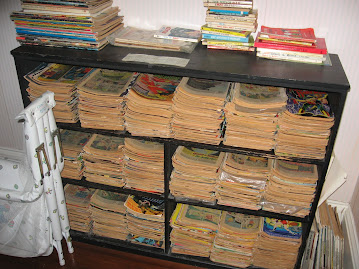
I found a picture of one of the bookcases in the now gone Comics Room at my parents’ house on Dean Road. The shelves are crowded with eighteen surprisingly neat piles of our treasured books, most with covers torn or corners lost, all pored over, memorized, and loved. The picture is of the DC side, given over to Superman, Batman, Flash etc. Not out of any lack of love, there are fewer titles represented than the Marvel bookcase across the room. So, this side also has my own personal Harvey collection – Sad Sack, Richie Rich, Little Dot, etc., books sporadically purchased in my younger days but read as frequently and loved just as greatly.

We never subscribed to comics that I remember. Every book on those shelves was hunted down for purchase, a labor of loyalty. Newsstands, five and dime stores, novelty stores, every new location we could find was interrogated for the welcome sight of a turning rack or a shelf of the magazines, standing primly in overlapping piles. In our early years, there was no such thing as a comics store, but the books were popular so the racks were ubiquitous, even if the selection from store to store may have been idiosyncratic. It often took us three or four stores to make sure we had the latest in all the titles we collected. But that was part of the thrill – a joy that all three of us siblings could agree on and share. A pursuit that even our frivolity averse parents did not mind. It was reading, after all, and they respected the written (and drawn) word above all things.

The books on the shelf have a bell curve of our interest and participation (like the giant box of baseball cards that I rescued from my parents’ house). There is a trickle from the early to mid 60s, followed by a flood from the turn of the decade, the height of the Silver Age. The vast majority of our books are from 1967 – 1972. In ’72, when we moved to Boston and created the legendary Comics Room, our interest was starting to wane, or perhaps it was our devotion to shared endeavor. Allison was in college. David had distanced a bit to fit in with his new classmates. Although we were given fair freedom to explore our new city, there were distance and convenience constraints that meant that we could no longer hunt out store after store. And perhaps the age of the comic book was starting to end. Our family still habituated bookstores and some, like the wonderful Paperback Booksmith in Coolidge Corner (still one of the best indy bookstores in the world) had a limited but satisfying selection, but the displays were harder to find.

Issues started to be missed. Titles were let go. The collections that we already had were still revered and read with frequency (in 2018 when I closed down the Dean Rd. house there were still piles of comics in each of our rooms), but the act of collecting had become less enthralling. Although I was able to keep some of my favorite titles going through high school, often by making semi-illicit sorties to a bookstore offering comics on “sinful” Charles Street (paying one of my classmates a dollar a time to accompany me), the bell was tolling. The last of our regular comic book purchases occurred in 1977 or 78.

The picture that I found includes so much more than its collection of fractals and pixels. Every pile on the shelf is familiar to me. Every torn cover or ruined corner. I can still hear the voices of the characters (“Groan, I should have known,” or “The gloves are off!”). I can still feel the electric thrill of grabbing a pile of comics to bring down to the table for one of our rare-treat reading meals. Or the dozy comfort of taking some of our printed friends down on a dreary, rainy day and basking in the familiar warmth of their company.


2.25.2022

A Year in Essays: 2/25/22 - Cruel War

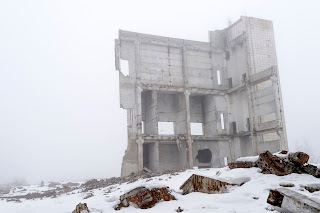
There is an unsettled disquiet about a war, even in another part of the world, even not fully involving us. We know it is there in the images of people hiding in dugout spaces, perched with guns in the snow on ruined walls. We feel it reverberating in the blare of 100-point headlines in the newspapers, the clarions of disaster. Our heads ring with the echo of global prayers from the stricken and the allied alike.

Do the invaders pray as well? Possibly they are praying for clarity and maybe forgiveness. They are attacking those who are of the same blood lines, the same stock, shared names and faces and in some cases language. The attackers cannot tell themselves from their victims without their uniforms.

Here, thousands of miles from the lines, we create our own furore in political barbs and economic whining. We have the luxury to be upset about a temporary rise in the cost of our gas or a temporary drop in the worth of our portfolios. Our sons and daughters may some day be brought into the morass; it has happened too many times before in our history. But for now, they are others’ children who are at risk, so we are confident in taking sides or giving our opinions from partial knowledge or ignorance.

But don’t be fooled. War in one place is hardship everywhere, whether through economic doubt or ecological catastrophe. Whether through refugees or the need for humanitarian aid. Whether through empathy or struggle. This war is shouting headline infamous, but all war is global. The seething disquiet tell us so.


2.22.2022

A Year in Essays: 2/22/22 - Happy Twos-Day

Today the world went collectively gaga over an accident of the calendar. On “Twos-day,” 2/22/22, the true superstitious underpinnings of our society were on full display. People got married in droves (“two-by-two” I guess), celebrated the births of auspicious children, and watched the clock in breathless fascination for 10:22 PM and 22 seconds (2222:22 by military time). Some even dug up old episodes of the benign sitcom “Room 222” to watch as a special occasion.

As calendar milestones go, Twos-day was fairly benign. No one to my knowledge thought the world was going to end, at least no more so than this crazy time already would have us believe. There were no cult watches or mass suicides as there were when the Mayan calendar supposedly ended (did those people panic in late December every year?) and no travel shutdowns for doomsday like at Y2K. There was no attempt to form a ritual linkage of all human arms as on the date of the Harmonic (dubbed by the less generous the “Moronic”) Convergence. All in good fun was this most recent of serendipitous palindrome days. But Twos-day does point to an innate superstition that even in modern society we cannot fully shake.

In the midst of Twos-day I went to the grocery store, stepping out with my bundles to encounter a woman in the midst of a sneezing fit. Two or three sneezes in, I was close enough to her to murmur, “Bless you.” She smiled her thanks and then sneezed again into the crook of her arm. Imagine approaching a total stranger at any other time and saying those words. In most places, you can’t even greet folks with a simple, “Good morning” without being rewarded with a suspicious xenophobic glare. But a sneeze gives all of us the right, the expectation even, to make an intensely personal wish. So ingrained is the habit (which is what superstition is) that we forget the meaning of the gesture. Granted, if I said to that woman, “Congratulations on expelling the evil demons in your head” I might have been treated to a far colder response.

I think it is important to look for the magical in such a mundane and muddied world as we live. Although a date like 2/22/22 is inevitable, it is nice to think that on one day at least there could be a release from the typical constraints of shopworn lives. Even if the release is only a bit of dark humor like the cartoon I saw of robots celebrating 2/22/2222 on a desolate landscape saying, “How the humans would have loved this!” Or a feeling that your wedding, your child, your birthday, or some other routine part of your life is somehow special because of the date on the calendar.

I can’t wait until 3/3/33!


2.13.2022

A YEAR IN ESSAYS: 2/13/22 - Something Big

Another Super Bowl. I’ve seen them all, you know, some with more interest than others.

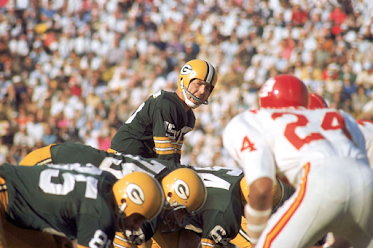
Although I can recall little about the first one in 1967 (not even called the Super Bowl then), I do remember my brother David’s incredible excitement. Somehow, he was a Green Bay fan – not sure how having been born in New York and lived part of his life in Pittsburgh. More than that, he was a huge football fan. He recognized the enormity of this event, even if the Networks and the rest of the world were unsure. To them, the AFL was just a start-up, after all. The Packers had won some enormous number of NFL championships in a row and should brush aside the upstarts. For many people, this game was little more than a curious exhibition – what the Pro Bowl is today.

Not for David, though. At the time of that first AFL-NFL match-up, we lived in New York, and he had followed with his curious avidity both the staid Giants and the upstart Jets (even then I gravitated towards the lowly Boston Patriots, probably in loyalty to my mother’s roots). He knew, knew in his heart, that the AFL was better than credited. He knew that the smart coaches that couldn’t break into the Old Boy’s Club that was the rank of NFL Head Coach were filling the younger league. He knew that the dash and flair of the AFL teams, with its goofy football and bright colors, overlay a revolution in the sport. Mostly, he knew the game would not be a lopsided folly. And it wasn’t – although Bart Starr and his Packers won handily, they had their hands full. David knew that this Super Bowl thing was going to be "something big!"

In 55 years, I have watched probably twenty Super Bowls sitting by my brother David’s side (along with my father if his beloved Steelers were playing). Many others I watched through continuous telephone conversations or at least a breathless phone call at the end (“What a game” or “What a crap game” his two favorite phrases). The last three years, of course, have been silent. I can tell you for whom David would have been rooting today. He never liked the Rams (although was a big Roman Gabriel fan). Too flash and flighty. There was something gritty about the Bengals that he always enjoyed. For him, it would have been Cincy all the way. 

But even with no rooting interest he would have been glued to the TV as he had each year, calling to me to join him and saying, “Come watch this, Keith. It’s going to be something big!”


2.09.2022

A YEAR IN ESSAYS: 2/9/2022: Olympic Ideals

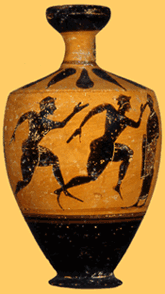
In the ancient world, the Olympics were a quadrennial time of truce. States laid down their weapons to allow the athletes to come together for open if not friendly competition. That’s the myth at least.

Now during two separate Olympic cycles the bully leader of Russia has waged war on neighboring Ukraine, in one case riding the surge of Nationalistic pride from hosting (Sochi 2014) and this year banking on the distraction of the spotlight on a more powerful enemy who may have be in accord with Russian ambitions. Such naked aggression would seem to be against everything that the Olympic movement stands for.

Except we haven’t had an Olympics free of rabid nationalistic fervor in, well, forever. For every feelgood story of a Russian and an American forming a lifelong friendship, there is another of blood in the water polo pool. And even if athletes are becoming citizens of the world, playing more for their sponsors than for their countries, the fans and observers are ever obsessed with owning the national rival, of using the competition as a surrogate for war.

There is nothing wrong with patriotic pride. I enjoy the images of a brilliant athlete basking in the glory of their national anthem with gold strung around their victorious neck. Does it make me proud to be American? I guess so, if only with the vicarious pleasure that I watch any sporting event. If a team or individual for which I am rooting wins, I enjoy their moment. But I cannot see how the brilliance of an American Olympian is any reflection either on me or on our society.

Neither then are the athletes the carriers of a nation’s glory. They are engaging, beautiful individuals who had the fortune of being born in one country (or in some cases to citizens of a country). They do not of necessity embody the beliefs or the politics or the foibles of their nation. We call out for them to support this or that which aligns with our own beliefs, but those are our beliefs, not even our country’s, and they may have their own.

In a world where everything is politicized beyond reason, can’t we set aside the jingoism and simply enjoy the pageantry of glorious competition? It was a beautiful myth in the ancient world. It is a beautiful myth now.